

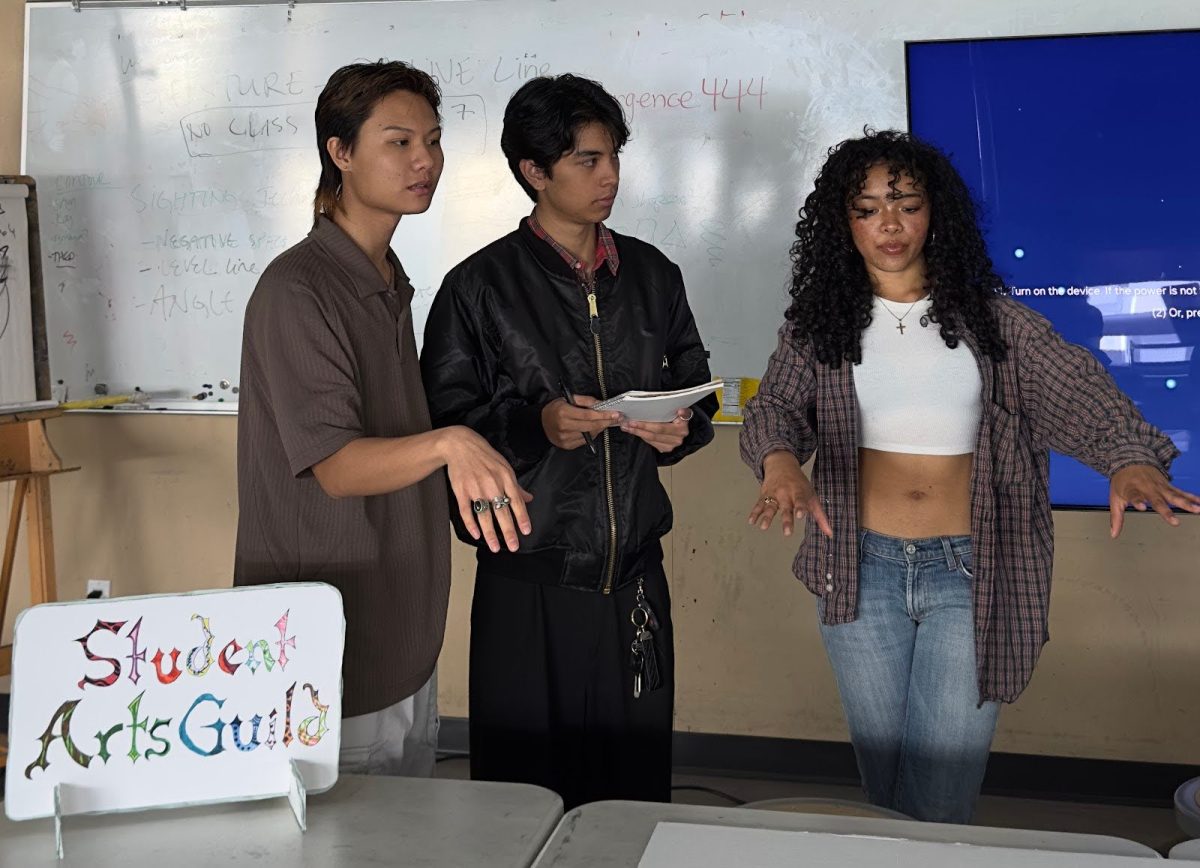











The Peralta Citizen received an honorable mention for the publication’s entry in NPR’s nationwide College Podcast Challenge on Thursday. “PCCD Alert — how a team of community college reporters investigated a shooting death on campus” told the story of how Peralta’s only student-run newsroom covered the Nov. 13 Laney College shooting.
According to the contest results announcement, NPR received “roughly 200 entries from students in 31 states and the District of Columbia.” Contest judges recognized 45 projects, including 10 finalists and 35 honorable mentions which judges “thought had a strong story to tell.”
The Citizen is one of three community colleges across the country recognized in the contest results — the others being Highline Community College in Washington and Miami Dade College in Florida. Other honorable mentions include entries from Stanford University, Duke University and Princeton University.
This podcast was originally published Jan. 16, 2026 to SoundCloud for entry into the contest.
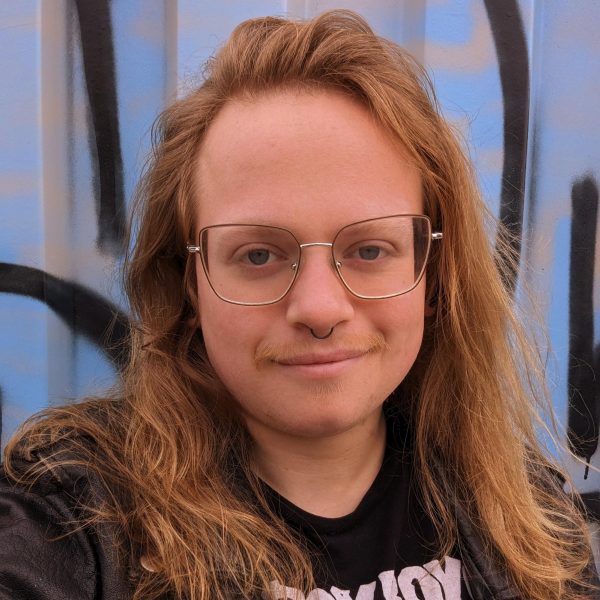
DESMOND MEAGLEY: It’s the end of finals week, fall of 2025. The setting sun is turning dried leaves into gold in the estuary by the Laney College community garden in Oakland, California. As the chief editor of the college district’s student newspaper, The Peralta Citizen, I’ve just given my team of reporters their final assignment for the semester: we’re covering a memorial service for Laney’s late athletic director.
If you’re from Oakland, chances are good you’ve heard his name before: John Beam. His football coaching career spanned 44 years. Between teaching at both Laney College and Skyline High School, Beam claimed to have sent over thirty football players to the NFL from Oakland schools.

Beam even tasted TV stardom in 2020 on the Netflix series, Last Chance U. The show’s fifth season followed him and his players on Laney College’s football team, the Eagles. He even had his own catchphrase: “Two claps, ready ready!”
His personality, his leadership, the impact he’d had in the lives of so many young athletes and scholars… It’s hard to capture his life in words, and it’s harder to capture how it ended.
During a regular school day in November, Beam was shot in the head at the Laney College Fieldhouse… allegedly, by one of his former students. He was 66, leaving behind his wife and two adult daughters. According to police it was a targeted attack, not an active shooter. And as our district’s student-run news publication, we responded the way we knew how: we started reporting.
The shooting rocked our entire community, at a time when the college was already going through huge changes. The chancellor of our community college district had just announced a plan for the district’s transformation in an effort to save the colleges from an ongoing budget crisis.
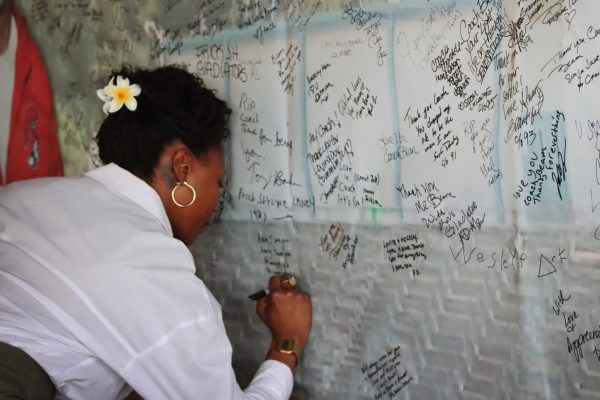
The day before the shooting, a district administrator named Abdul Pridgen — he’s the director of community safety — had led a presentation about some of those changes, which included a major overhaul to security on campus. One of our staff writers, Erik Bracken, was there reporting.
ERIK BRACKEN: I had gone there to cover updates about security at the district. I’d been following the development of Abdul Pridgen’s holistic safety and wellness plan, and the future of security at the district. There was a discussion about armed security at the district, about training a district police force like the Peralta District had back in the nineties. Of course it’s a huge decision. There hasn’t been armed security on the Laney campus for half a decade now.
MEAGLEY: John Beam was in the room for that meeting.
BRACKEN: There were some people, Beam included, saying that the district had been safer with the sheriff’s contract and that they had concerns about safety. He only discussed his security concerns very briefly, and he mostly seemed concerned about stolen equipment, break-ins, and actual police reports filed after the fact by the security contractors. And there were other people who expressed their opinion that guns on campus weren’t going to make the campus safer.
MEAGLEY: It was 12:16 pm the next day when we got this message.
VOICE MESSAGE: PCCD alert! An active shooter has been reported at the Laney Fieldhouse. Please avoid the area. Stay locked down until further notice. We will update when we have more information.
ELIOT FAINE: I remember that day really well because it was raining and I missed my bus, so I got to class late.
MEAGLEY: Eliot Faine is a senior editor for The Citizen. He was on campus at the time of the shooting, in class with some of our other writers.
IVAN SARAVIA: Outta nowhere in the middle of the class, everybody gets an alert that there’s an active shooter on campus.
MEAGLEY: That’s Ivan Saravia, another one of our senior editors.
SARAVIA: My first thought was just, “Oh, okay. I don’t know how to deal with this, so, I don’t know. I’m a newsman, so I’m just gonna run after the news.”
FAINE: When the lockdown lifted, maybe around an hour later or so, that was kind of all the information that we got from the district — the lockdown was lifted, we could go home. Classes were canceled for the rest of the day. It’s a wide open campus. It’s a little bit unnerving when you get an email that says, “Everything is fine. Now go outside.”
They wondered if it was safe to even go home yet. After all, wasn’t the suspect still at large?
FAINE: As a journalist, I felt very prepared and as a student I felt really unprepared. I have been attending classes at Laney campus in person for two years, and I’ve never done a lockdown drill. Ivan wanted to go pretty much immediately as soon as we got the notification, but we stayed in lockdown until it lifted. I decided to go with him. It was pouring rain. I had the camera, so I had taken off my over-shirt and threw that over my camera, so I’m walking around in a tank top in the rain. We got there to the Fieldhouse and there was cop cars. Our district executive safety director was outside speaking with cops. We got there probably 10 or 15 minutes before the homicide detectives showed up.
MEAGLEY: At first, neither the police nor the district would confirm the identity of the victim. As the picture did come into focus, it was hard to believe. John Beam, of all people, shot? It sounded like the sort of sensational rumor that journalists are cautioned against spreading. But after our reporters visited Highland Hospital, where Beam was transported, we confirmed that the rumor was reality. So we made the call to start writing an obituary.
Beam was pronounced dead at 10 a.m. the next morning. Our district’s board of trustees passed a resolution to honor his death in the following days. As the college mourned, our newsroom was swept into a frenzy.
Rumors swirled around the suspect in police custody, Cedric Irving Jr. But contrary to many reports calling him just a loiterer on campus, we learned that Irving was a former student at Laney College. Other outlets later revealed he had taken a class with Beam before. Our college administrators haven’t commented on the connection between Irving and the college.
Immediately following the obituary, we published a story about Beam’s comments during the safety meeting in collaboration with the San Francisco Standard. This would be our most viewed article of all time. For days afterwards, we fielded requests from other outlets about our reporting, asking if we were shocked, if we felt safe on campus, and if we thought Beam was right that there needed to be more security.
MEAGLEY: How did it feel, as a first semester reporter?
BRACKEN: Terrifying. Honestly, I never expected to be under that kind of pressure. I remember I just kept saying, “Hell of a first semester.” But when the pressure is on like that, you have to meet the moment.
MEAGLEY: School administrators have repeatedly declined our requests for interviews about the shooting, but we’re not so easily dissuaded. After all, our reporters are woven into the fabric of our college. This experience showed me how much responsibility comes with that connection. Local reporting, like what we do at The Peralta Citizen, offers members of a community the opportunity to tell their own stories and find self-determination through writing that first draft of history. And ultimately, the community’s trust is what makes it all possible.
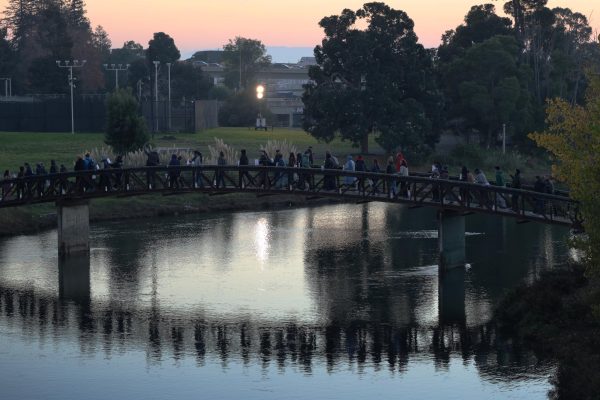
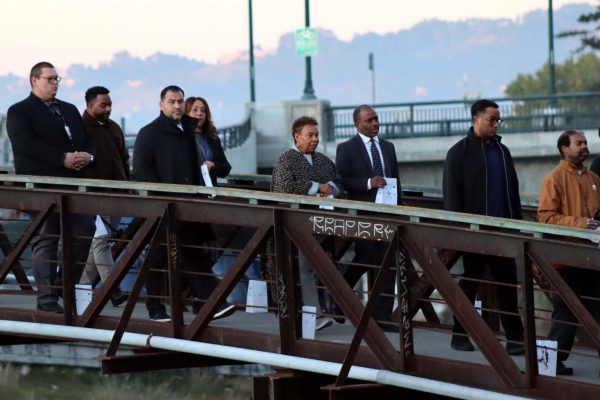
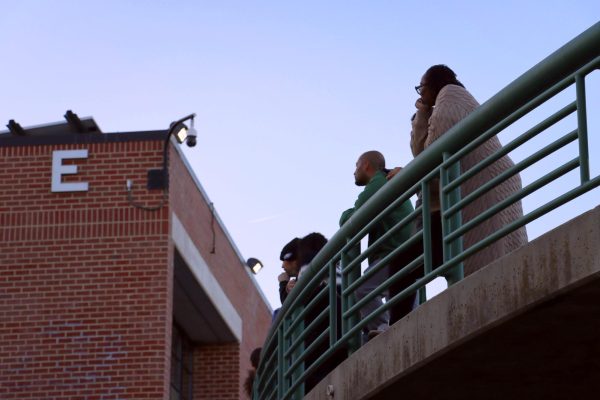
Back in the estuary, as my team and I waited for John Beam’s memorial to start, more and more people crowded into the area outside the college’s garden. More than I’ve ever seen on campus all at once before: Students, teachers, administrators, alumni, athletes, politicians, faith leaders, parents, neighbors… Oaklanders.
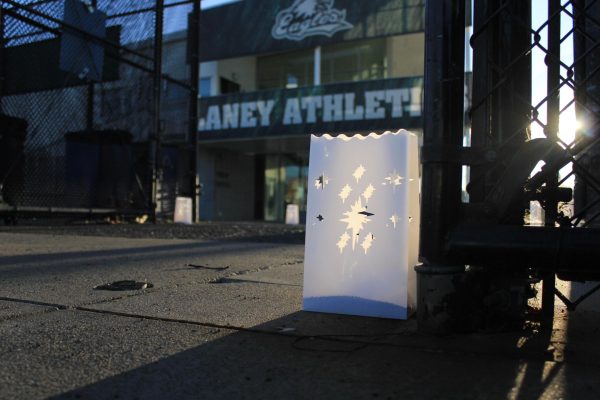
As twilight set in, the entire crowd journeyed across the campus holding luminaria lanterns, symbolically retracing a path that John Beam and his students took between campus and the Fieldhouse. TV cameras from broadcast news networks framed the crowd on either side of the path. As I walked shoulder-to-shoulder with my college community, silently filming on my phone, the person ahead of me saw my student press badge and smiled. She said…
VOICE: That’s the only newscaster we really need here.